Wednesday, December 31, 7000

Permanent Top Post by JM Talboo and Steve W.


By JM Talboo and Steve W.

http://911debunkers.blogspot.com/2008/10/debunking-myths-on-conspiracy-theories.htmlMany people subconsciously make the mistake of only seeing the issues concerning 9/11 in black and white, as opposed to shades of gray. This is known as the black-or-white fallacy. In this case, the false dilemma is: 9/11 was either carried out by Al-Qaeda or it was "an inside job."

Just because the evidence suggests that rogue elements of the US government and intelligence apparatus, as well as other international intelligence agencies, were involved, doesn't mean bin Laden and Al-Qaeda hijackers weren't involved.

In the fight to uncover the truth about 9/11 we must contend with individuals and groups that distort, omit and lie about important details in order to defend the official narrative - the 911 truth debunkers.


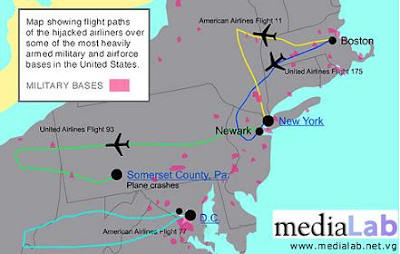
The NORAD-stand-down, various whistleblowers ("debunkers" just assert they are all confused lying with no basis), and peer-reviewed studies of the physical evidence centered around the destruction of the 3 World Trade Center Buildings in New York, make a strong case that the attacks involved substantial inside help.

“I think it’s implausible to believe that 19 people, most of whom didn’t speak English, most of whom had never been in the United States before, many didn’t have a high school education, could have carried out such a complicated task without some support from within the United States” - 
Former Sen. Bob Graham on 60-Minutes 


We might be wrong about where we suspect this all leads, but the "debunkers" are wrong when many essentially argue that it's acceptable for 70% of 9/11 family members questions to have never been answered by the 9/11 Commission. So of course, most have no qualms about promises made to 9/11 family members being broken by the Commission to investigate all whistleblower claims, which a substantial amount of the public find highly-suspicious at minimum, with many regarding the evidence as suggestive of complicity to varied degrees.

The below link proves that many thousands of family members want a new investigation. Likely the amount of people killed that day is outnumbered by these 9/11 victim's family members.


Truth Teller's Radio Episode 16 - 9/11/2018 JM Talboo Interviews Richard Gage about the 3000+ Architects and Engineers for 9/11 Truth:

http://truthtellersradio.blogspot.com/2018/09/truth-tellers-radio-episode-16-9112018.html


Are there more problems with the UAF/Hulsey/AE911Truth WTC7 Draft Report or the NIST WTC 7 Report? You Decide...

http://911debunkers.blogspot.com/2019/09/are-there-more-problems-with.html

Firefighters for 9/11 Truth Tribute Page:

http://911debunkers.blogspot.com/2014/03/firefighters-for-911-truth-tribute-page.html


Unsurprisingly, the duh-bunk-turds hate even the best of the "Loose Change" films, but loose ends are no biggie.

The Washington Post reported on August 2, 2006 that:
Suspicion of wrongdoing ran so deep that the 10-member commission, in a secret meeting at the end of its tenure in summer 2004, debated referring the matter to the Justice Department for criminal investigation, according to several commission sources... "We to this day don't know why NORAD [the North American Aerospace Command] told us what they told us," said Thomas H. Kean, the former New Jersey Republican governor who led the commission. 'It was just so far from the truth. . . . It's one of those loose ends that never got tied."
So, if 9/11 didn't have an inside element, what's to stop such a scenario from taking place in the future when we get investigations that have attributes like these? 

It is therefore the purpose of this website to rebut the hollow claims of the so-called 911 truth "debunkers" and clarify what is known about the attacks for the benefit of those following the debate and also for the largely uninformed public. This site now features 9/11 truth related and not-so-related content. So please utilize our search feature (found also on the sidebar) to find a massive treasure trove of well-researched info on nearly every issue in the realm of 9/11 truth debate. 

Sorry that we don't allow any comments, but if you wish to communicate any thoughts you have about the published material please contact us here. Ad hominems will be ignored, but well-formed rebuttals may be addressed (and that is a subjective matter) provided we have not refuted the points therein numerous times on this blog already.

FAIR USE NOTICE

National Security Notice 

We are NOT calling for the overthrow of the government. In fact, we are calling for the reinstatement of our government. We are not calling for lawlessness. We are calling for an end to lawlessness and lack of accountability and a return to the rule of law. Rather than trying to subvert the constitution, we are calling for its enforcement. We are patriotic Americans born and raised in this country. [Four foreign countries also represented here at DTD]. We love the U.S. We don't seek to destroy or attack America ... we seek to restore her to strength, prosperity, liberty and respect. We don't support or like Al Qaeda, the Taliban or any supporting groups. We think they are all disgusting. The nation's top legal scholars say that draconian security laws which violate the Constitution should not apply to Americans. Should you attempt to shut down this site or harass its authors, you are anti-liberty, anti-justice, anti-American ... and undermining America's national security.

To support this site please make a small one time donation to: 


The information on this site is not intended or implied to be a substitute for professional medical advice, diagnosis or treatment. All content, including text, graphics, images and information, contained on or available through this web site is for general information purposes only. The bloggers on this site make no representation and assumes no responsibility for the accuracy of information contained on or available through this web site, and such information is subject to change without notice. You are encouraged to confirm any information obtained from or through this web site with other sources, and review all information regarding any medical condition or treatment with your physician. NEVER DISREGARD PROFESSIONAL MEDICAL ADVICE OR DELAY SEEKING MEDICAL TREATMENT BECAUSE OF SOMETHING YOU HAVE READ ON OR ACCESSED THROUGH THIS WEB SITE.

The bloggers on this site do not recommend, endorse or make any representation about the efficacy, appropriateness or suitability of any specific tests, products, procedures, treatments, services, opinions, health care providers or other information that may be contained on or available through this web site. 

Sunday, November 8, 2026

NFL Referees Under Fire Again: The Most Controversial Calls, Missed Penalties, and Officiating Blunders of the 2026 Season

NFL Referees Under Fire Again: The Most Controversial Calls, Missed Penalties, and Officiating Blunders of the 2026 Season

By JM Talboo

It's becoming an annual tradition in the NFL: the players take the field, the fans fill the stadiums, and before long, everybody is arguing about the referees.

Earlier this season, we examined some of the questionable officiating decisions from the opening weeks of the NFL season. But with more games now in the books, the list of controversial calls has grown considerably.

And this year, there is another dimension to the story. The league has faced criticism over the sheer number of penalties, inconsistent interpretations of the rules, questionable replay decisions, and even the conduct of officials toward players.

Some of these decisions have directly affected scoring opportunities. Others have changed possession, extended drives, or potentially altered the outcomes of close games.

Here is an expanded look at some of the most talked-about NFL officiating controversies through Week 8 of the 2026 season.

1. The Packers-Vikings Game: A Fourth-Quarter Penalty Parade

One of the most controversial officiating sequences of the opening weeks occurred during the Green Bay Packers' matchup with the Minnesota Vikings.

The Vikings were trailing 22-17 when Green Bay stopped Jordan Love on fourth-and-one. Minnesota then began a lengthy scoring drive that included multiple defensive penalties against the Packers.

Among the calls were:

  • Encroachment against Jonathan Ford.
  • Illegal contact against Javon Bullard, wiping out a third-down sack.
  • A late-hit penalty against Chris McClellan.
  • Defensive holding against Xavier McKinney, which erased an interception by Evan Williams.

The holding penalty was particularly consequential. Instead of Green Bay taking possession after the interception, Minnesota retained the ball and scored a touchdown on the following play.

The Packers finished with 12 penalties for 98 yards.

Green Bay had plenty of opportunities to close out the game, but the sequence generated considerable debate about how much influence officiating should have on a decisive fourth-quarter possession.

There was another controversial moment involving an apparent facemask grab on Minnesota receiver Justin Jefferson that went uncalled.

2. The Saints-Lions Game: Was It a Fumble or an Incomplete Pass?

New Orleans Saints fans had a particularly frustrating experience in Week 1 against Detroit.

Quarterback Jared Goff was hit by Saints defensive end Chase Young while beginning his throwing motion. The ball traveled backward and was recovered by New Orleans safety Jonas Sanker, who returned it for an apparent touchdown.

Officials initially ruled it a fumble and touchdown.

After replay review, however, the call was reversed and ruled an incomplete forward pass.

The explanation centered on the timing of Goff's throwing motion. Under NFL rules, contact after a passer begins a forward throwing motion can result in an incomplete pass, even when the ball travels backward.

The ruling was technically supported by the league's interpretation of the rule, but it was still a frustrating moment for Saints fans who had watched their defense apparently score.

The controversy became even more interesting after a later game against the Raiders produced a similar-looking quarterback turnover involving New Orleans.

3. The Broncos-Rams Game: The Pass Interference Call That Changed Everything

Perhaps one of the most consequential officiating controversies of September occurred during the September 27 matchup between the Denver Broncos and Los Angeles Rams.

The Rams were leading 26-23 late in the fourth quarter.

Denver quarterback Bo Nix threw toward receiver Pat Bryant, but Rams cornerback Josh Wallace appeared to intercept the pass.

Instead of ending the drive, officials threw a defensive pass interference flag against Wallace.

Denver retained possession and eventually scored the game-winning touchdown in a 30-26 victory.

Rams coach Sean McVay was understandably frustrated.

But the most interesting development came afterward.

McVay said the NFL subsequently acknowledged that Wallace should not have been called for pass interference.

That admission gave the controversy considerably more weight than an ordinary disagreement between fans and officials.

The Broncos benefited from a penalty that the league reportedly later acknowledged was incorrect.

4. The Record-Breaking Penalty Problem

The 2026 season also got off to an unusually flag-heavy start.

According to CBS Sports, the NFL recorded 963 accepted penalties through the first four weeks of the season.

That was the highest total through four weeks since play-by-play penalty data became available in 1978.

Week 4 alone produced 271 accepted penalties, the second-highest single-week total during that period.

Even more interesting was the number of touchdowns erased by penalties.

Seventeen touchdowns had been nullified through the first four weeks, compared with only five through the same period the previous season.

This raises an important question: Are players simply committing more penalties, are officials enforcing the rules more aggressively, or are both things happening simultaneously?

Whatever the explanation, fans are seeing more drives disrupted and more scoring opportunities erased.

5. Mike Vrabel Gets Penalized for Arguing With Officials

The New England Patriots' Week 4 game against Buffalo produced another officiating controversy.

Patriots coach Mike Vrabel became frustrated with a defensive holding call and argued with referee Bill Vinovich.

Vrabel received an unsportsmanlike conduct penalty for his comments.

The penalty advanced Buffalo toward the goal line, and the Bills subsequently tied the game.

Afterward, Vrabel suggested the referee had been overly sensitive.

The incident became part of a much larger discussion about the relationship between coaches, players, and officials.

There is certainly a place for maintaining respect for referees. But there is also a legitimate question about how much emotional expression should result in additional penalties during an already heated football game.

6. Two NFL Officials Suspended Over Their Conduct

Perhaps the strangest officiating story of the early season involved the NFL actually suspending two officials.

Arizona Cardinals tight end Trey McBride became involved in a heated exchange with line judge Jeff Seeman.

Video and subsequent reporting indicated that Seeman used vulgar language toward McBride.

The league issued Seeman a two-game suspension.

In a separate incident, referee Adrian Hill was suspended for one game following an exchange with Minnesota Vikings linebacker Eric Wilson.

Hill had fallen after being knocked down during a play involving Miami running back Ollie Gordon II. Wilson appeared to offer the official assistance in getting back up, but Hill instead reacted angrily toward him.

The NFL determined that the officials' conduct fell short of professional expectations.

The referees' union challenged the suspensions, describing the discipline as excessive and inconsistent with established precedent.

It's unusual enough when players get into arguments with officials. It's considerably more unusual when the league has to discipline the referees themselves.

7. The Packers-Lions Game: A Whistle Nobody Could Hear

The October 25 matchup between Green Bay and Detroit produced another major controversy.

During the third quarter, Lions receiver Amon-Ra St. Brown was brought down by Packers linebacker Isaiah McDuffie.

The action continued, and Green Bay defensive tackle Devonte Wyatt tackled St. Brown again.

Umpire Terry Killens Jr. became involved in the play and went to the ground. Wyatt was flagged for unnecessary roughness, giving Detroit an important first down.

The Packers argued that no whistle had sounded and that their players had continued playing because they believed the play was still live.

After the game, referee Alex Moore explained that officials had ruled the play dead following the initial tackle.

But Moore also acknowledged that he could not honestly hear whether a whistle had sounded.

That distinction became the center of the controversy.

If players cannot hear a whistle and believe the play is continuing, how should they be expected to know that additional contact will result in a personal foul?

The Packers were particularly frustrated because the penalty extended a Detroit scoring opportunity.

The game also included other disputed calls, including roughing-the-passer penalties and a defensive pass interference call that erased a Green Bay interception.

8. A Touchdown Taken Away From Amon-Ra St. Brown

The November 1 matchup between Detroit and Minnesota produced another disputed replay decision.

Lions quarterback Jared Goff connected with receiver Amon-Ra St. Brown on what initially appeared to be a 24-yard touchdown reception.

Officials initially ruled the play a touchdown.

After replay review, however, the ruling was overturned and the pass was declared incomplete.

Detroit was forced to settle for a field goal.

Fans immediately questioned the decision, with many arguing that St. Brown had completed the catch.

The controversy once again highlighted one of the NFL's most persistent problems: the difficulty of applying the catch rule consistently when a receiver is going to the ground.

The Lions eventually won 19-15, but the disputed touchdown remained a major talking point.

9. The Saints-Raiders Game: A Quarterback Rule Under the Microscope

New Orleans found itself on the wrong side of another controversial quarterback ruling in its September 27 loss to Las Vegas.

Saints quarterback Tyler Shough lost possession after being hit, and the officials ruled the play a fumble.

Saints supporters immediately compared it to the Week 1 Jared Goff play against Detroit, when a backward-moving football was ruled an incomplete pass.

There is a technical distinction involving whether the quarterback has begun a forward throwing motion before being contacted.

But the two plays looked similar enough to generate considerable frustration.

The larger issue is that split-second differences in the interpretation of the throwing motion can produce dramatically different results.

One team loses an apparent defensive touchdown. Another team gets possession after a fumble.

For fans watching at home, understanding exactly where that distinction lies isn't always easy.

10. The Bigger Problem: Consistency and Accountability

Looking across the first eight weeks, there are several recurring themes.

Replay isn't necessarily eliminating controversy. In some cases, reviews have overturned calls that initially appeared straightforward, creating additional arguments about what constitutes clear and convincing evidence.

Penalties can have enormous consequences. A defensive holding call, pass interference penalty, or questionable roughing-the-passer decision can extend a drive and change the score.

The rules are increasingly complicated. The quarterback throwing-motion distinction and the catch rule are examples of situations where fans can watch the same play and reach very different conclusions.

Officials are accountable too. The suspensions of Jeff Seeman and Adrian Hill demonstrate that the league recognizes that referees must maintain professional standards.

Postgame explanations matter. Pool reports and public admissions can help explain controversial decisions, but they don't restore points or reverse results.

Should the NFL Make More Officiating Calls Reviewable?

One possible solution is expanding the number of decisions that can be challenged or reviewed.

Pass interference is an obvious example.

The NFL briefly experimented with making pass interference reviewable in 2019, but the experiment was widely considered unsuccessful and was discontinued.

Still, the Broncos-Rams controversy illustrates why the question keeps coming back.

If an incorrect penalty can effectively erase an interception and help decide a close game, shouldn't there be some mechanism for correcting it?

Of course, unlimited reviews would create other problems. Football already has lengthy replay delays, and expanding review authority too far could turn every possession into a courtroom proceeding.

The league needs a balance between correcting obvious mistakes and preserving the flow of the game.

Final Thoughts

NFL referees have an extraordinarily difficult job. The game is fast, physical, and increasingly complicated. Officials must make decisions in fractions of a second while players and coaches are moving at full speed.

Not every controversial call is necessarily a bad call. Sometimes the rulebook supports a decision that simply looks strange to viewers.

But that doesn't mean the league should be immune from criticism.

When the NFL itself acknowledges incorrect calls, when replay decisions erase apparent touchdowns, when penalties repeatedly extend crucial drives, and when officials are suspended for their own behavior, there are legitimate questions about consistency and accountability.

Fans don't expect perfection.

They do expect fairness.

And perhaps the most important thing the NFL can do is make sure that the outcome of a football game is determined primarily by the players on the field rather than by inconsistent interpretations of the rulebook.

The players are supposed to decide the game. The officials are supposed to make sure the rules are followed. That distinction should never get lost.


Sources and Further Reading

  1. The Big Lead – NFL Week 1: Most Controversial Calls

  2. CBS Sports – NFL Sets Penalty Record Through Week 4

  3. Front Office Sports – Sunday’s Biggest NFL Games Plagued by Debatable Calls

  4. Sports Illustrated – NFL Admits Refs Were Wrong on Broncos-Rams Call

  5. Yahoo Sports – What's Going on With NFL Officiating?

  6. Packers.com – Packers Befuddled as Penalties Again Loom Large

  7. Yahoo Sports – NFL Referee Addresses Devonte Wyatt's Controversial Penalty

  8. Pro Football Network – Fans Question Replay Decision on Amon-Ra St. Brown Touchdown

  9. Sports Illustrated – Two Controversial Calls Add to Saints' Frustration After Raiders Loss

Editorial note: Controversial decisions are not automatically proof of referee misconduct or intentional favoritism. This article distinguishes disputed calls, documented rule interpretations, and instances in which the league reportedly acknowledged an officiating error.

Four-Legged Heroes: The Search-and-Rescue Dogs of September 11

Four-Legged Heroes: The Search-and-Rescue Dogs of September 11

By JM Talboo

When we remember September 11, 2001, we naturally think of the firefighters, police officers, emergency personnel, military members, and ordinary citizens who rushed to help in the aftermath of the attacks.

But there was another group of heroes working alongside them, often climbing through dangerous rubble, searching collapsed buildings, and navigating environments that even experienced rescue workers struggled to enter.

They had four legs, incredible noses, and an extraordinary willingness to work alongside their human partners.

They were the search-and-rescue dogs of 9/11.

More than 300 specially trained dogs participated in search, rescue, recovery, and comfort operations following the attacks. They came from across the country and performed several different jobs at Ground Zero, the Pentagon, and other response locations.

Their stories deserve to be remembered.

The dogs that searched for survivors

In the hours following the collapse of the World Trade Center towers, specially trained search-and-rescue dogs were brought into the disaster zone.

These animals were trained to detect the scent of living human beings trapped beneath debris. Their smaller size, agility, and extraordinary sense of smell made them invaluable in places where human rescuers had difficulty searching.

One of the most remarkable facts about the operation is that the last living person rescued from the World Trade Center rubble, 27 hours after the collapse, was located with the assistance of a search dog.

As the days passed and the possibility of finding additional survivors diminished, the dogs' assignments increasingly shifted toward locating victims' remains.

This created an unusual challenge. Search dogs are motivated by finding people, and handlers realized that repeatedly searching without a successful live find could discourage them.

Some handlers therefore staged what became known as mock finds, allowing the dogs to experience the reward of locating someone and keeping their enthusiasm for the work alive.

It was a small but important reminder that these animals were not machines. They were working partners who needed care, encouragement, and rest.

Some of the memorable canine heroes

1. Bretagne – The Golden Retriever Who Became a Symbol of 9/11 Rescue Dogs

worked at Ground Zero with her handler, Denise Corliss, as part of Texas Task Force 1.

She was only two years old when she arrived in New York.

Bretagne became one of the most recognizable canine responders of September 11. She continued her work as a search-and-rescue dog for years afterward.

She was widely remembered as the last known surviving search dog who had worked at Ground Zero. Bretagne died in June 2016, just short of her seventeenth birthday.

2. Atlas – The NYPD K-9 Who Witnessed the Collapse

NYPD K-9 officer Robert Schnelle and his dog Atlas were among the earliest canine responders at the World Trade Center.

Schnelle was there when the attacks unfolded. He and Atlas took cover when the South Tower collapsed and remained involved in the search-and-rescue operation afterward.

Their story is a reminder that some of the police dogs and their handlers were caught in the disaster themselves before returning to help.

3. Apollo – The NYPD German Shepherd Honored for His Service

Apollo was one of the canine heroes recognized internationally for his work after September 11.

On March 5, 2002, he received the Dickin Medal on behalf of the search-and-rescue dogs that worked at Ground Zero and the Pentagon.

The Dickin Medal is often described as the animal equivalent of the Victoria Cross.

It recognized the courage and dedication of the many dogs that participated in the rescue and recovery effort.

4. Ricky – The Little Dog Who Could Reach Places Others Couldn't

Ricky was a rat terrier who worked with the Puget Sound Urban Search and Rescue team.

Weighing only about 18 pounds, Ricky had an advantage over larger dogs: he could enter narrow openings and collapsed spaces that other search dogs couldn't easily access.

Working alongside a golden retriever named Thunder, Ricky helped search damaged stairwells and other difficult locations.

His story illustrates why rescue teams used dogs of different sizes and breeds.

5. Thunder – A Golden Retriever on the Night Shift

Thunder worked alongside Ricky during the Ground Zero operation.

The two dogs searched together, with both trained to signal when they located a living person.

Their assignments involved searching dangerous and unstable areas during the overnight hours.

Their work was a difficult reminder of the distinction between searching for survivors and locating those who had not made it out.

6. Cowboy – The FEMA-Certified Rescue Dog

Cowboy arrived in New York on September 16, 2001, with his handler Dave Richards of Utah Task Force 1.

Richards described Cowboy as exceptionally intelligent, comparing him to a little person with four legs.

Cowboy was one of hundreds of canine teams that traveled from around the country to help with the recovery operation.

7. Scout – The Indiana Task Force 1 Rescue Dog

Scout was another canine responder documented in photographs from Ground Zero.

He worked with Indiana Task Force 1 and was photographed resting between assignments.

Like many other dogs at the site, Scout needed regular breaks from the exhausting work.

8. Gus – The Pentagon Rescue Dog

Gus worked with Tennessee Task Force 1 at the Pentagon in Arlington, Virginia.

Photographs from September 2001 document Gus and his handler, Ed Apple, searching through the wreckage.

The Pentagon operation involved specialized search teams and canine responders working in the damaged building.

9. Nikie – The Therapy Dog Who Comforted Ground Zero Workers

Not every canine hero was searching through debris.

Nikie, a golden retriever working with handler Frank Shane, was a therapy and disaster-relief dog.

Together, they spent months helping people at Ground Zero and other relief locations.

Nikie provided comfort to exhausted rescue workers and people dealing with tremendous emotional stress.

The dog and handler remained involved until the recovery site was cleared. They even participated in the Last Column ceremony, distributing flags to recovery workers.

Nikie passed away in 2004, but her contribution remains part of the 9/11 Memorial Museum's history.

10. Sirius – The Port Authority K-9 Who Never Came Home

Not every canine hero survived September 11.

Sirius was a Port Authority Police Department explosives-detection dog stationed in his kennel beneath the South Tower.

When the attacks happened, his handler, police officer David Lim, was away from the kennel.

Sirius was killed when the South Tower collapsed. His remains were recovered during the winter of 2002.

He is remembered as the only police dog known to have been killed in the World Trade Center attacks.

His story is a particularly heartbreaking reminder that the tragedy affected animals as well as people.

Roselle and Salty: The Guide Dogs Who Led Their Owners to Safety

Another remarkable story involves two guide dogs named Roselle and Salty.

Both dogs helped their blind owners escape the World Trade Center on September 11.

Roselle guided her owner, Michael Hingson, down more than 70 floors of the North Tower while the building was still standing.

Salty also helped guide his owner, Omar Rivera, through the evacuation.

Their journeys involved navigating crowded stairwells, smoke, confusion, and the enormous challenges of evacuating a skyscraper during a disaster.

Both dogs received the Dickin Medal jointly in recognition of their extraordinary devotion and courage.

Their stories demonstrate that canine heroism wasn't limited to formally designated rescue teams.

Sometimes a dog's most important job was simply getting the person who depended on it to safety.

The Forgotten Heroes: Veterinarians Who Cared for the Dogs

The dogs faced considerable physical challenges while working at Ground Zero.

They climbed over twisted metal, broken concrete, dust, and debris. Their paws, eyes, and noses needed frequent cleaning and attention.

Some suffered cuts, abrasions, dehydration, exhaustion, and respiratory irritation.

Veterinary teams were therefore brought in to provide emergency treatment and ongoing care.

Federal Veterinary Medical Assistance Teams helped establish treatment facilities, and veterinarians and technicians worked long shifts to care for the animals.

From September 11 through October 31, federal veterinary teams provided more than 900 treatments to approximately 300 search dogs.

This included treating injuries, cleaning contaminated coats, providing fluids, and monitoring the animals' physical condition.

The dogs needed their own emergency medical response, and the people who provided it deserve recognition too.

The Emotional Side of Rescue Work

One of the most touching aspects of the 9/11 canine response was the comfort these animals provided.

Rescue workers spent exhausting hours surrounded by destruction, uncertainty, and grief.

Even a brief opportunity to pet a friendly dog or play fetch could provide a momentary escape.

Therapy dogs visited Ground Zero and family assistance centers, offering companionship to people experiencing extraordinary emotional stress.

Children also sent drawings and messages thanking the dogs for their work.

The dogs became symbols of hope during a period when hope was desperately needed.

A Legacy That Continues

The dogs of September 11 helped demonstrate how important specially trained animals can be during major disasters.

Their contributions also helped bring greater attention to veterinary care, working-dog health, disaster response training, and the emotional needs of rescue animals.

Today, their stories are preserved through photographs, artifacts, interviews, books, and exhibits at the National September 11 Memorial & Museum.

More than two decades later, their service remains worth remembering.

We often describe dogs as man's best friend, but September 11 gave us another reason to appreciate them.

They were searchers, rescuers, companions, guides, and sources of comfort.

Some helped locate survivors. Some helped recover victims. Others helped exhausted human beings find a few moments of peace amid an unimaginable tragedy.

And some, like Sirius, paid the ultimate price.

They couldn't understand the politics, the hatred, or the events that brought them there. They only knew that their partners needed them, and they went to work.

That is a legacy worth honoring.


Further Reading and Sources

  1. National September 11 Memorial & Museum – 9/11's Furry Heroes

  2. National September 11 Memorial & Museum – The Four-Legged Heroes

  3. National September 11 Memorial & Museum – Four-Legged 9/11 Heroes

  4. National September 11 Memorial & Museum – Remembering K-9 Cowboy

  5. American Kennel Club – The Lasting Impact of the Dog Heroes of 9/11

  6. National September 11 Memorial & Museum – K-9 for Kids: Tails at Ground Zero

The stories of these animals are based on historical records, museum collections, and accounts from their handlers and rescue organizations. Individual assignments and achievements should be distinguished from the collective accomplishments of the hundreds of canine responders.

Seven Batches of UFO Files: The Most Fascinating Discoveries, Strange Encounters, and Unanswered Questions

Seven Batches of UFO Files: The Most Fascinating Discoveries, Strange Encounters, and Unanswered Questions

By JM Talboo
UnDebunkingUFOs.blogspot.com

The U.S. government's ongoing release of previously classified UFO and Unidentified Anomalous Phenomena (UAP) records has given researchers, journalists, and independent investigators a substantial new collection of material to examine.

Since May 2026, seven batches of records have been published through the Department of War's PURSUE disclosure program. The collection now contains approximately 478 indexed records, including historical intelligence reports, military videos, NASA photographs, FBI interviews, audio recordings, and documents from several government agencies. The records span decades of UFO investigations, from the 1940s through 2026.

But what is actually interesting in all this material? Here are some of the highlights that deserve closer examination.

1. The 2023 encounter involving six federal agents and mysterious orbs

One of the more intriguing cases comes from October 2023, when six federal law enforcement agents reportedly encountered unusual aerial phenomena near a sensitive national security facility in the western United States.

The witnesses described large orange orbs apparently releasing smaller red orbs. The reports covered multiple observations over two days.

What's particularly interesting is that this wasn't simply an anonymous internet sighting. The release included individual witness narratives and an official AARO case-analysis memorandum.

The case remains unresolved. That doesn't establish an extraordinary explanation, but multiple firsthand accounts from federal personnel make this one worth examining carefully.

Original case document: DOW-UAP-D077.

2. The black triangular craft reports

Several FBI records released in the fifth batch concern witnesses describing enormous black triangular objects.

The FBI conducted formal interviews and included digital renderings based on witness descriptions. These reports cover multiple sightings between 2002 and 2023.

The seventh batch added another interesting case: a 2026 report involving a triangular object observed near a sensitive western U.S. facility. Federal personnel reportedly described it rising vertically, hovering, and then banking and descending toward a canyon.

AARO considered the case worthy of further investigation, although it did not reach a conclusive finding.

The recurring triangular configuration is particularly interesting when considered alongside decades of similar reports.

3. The Gulf of Oman: An AC-130 crew encounters mysterious orbs

One of the more unusual military reports concerns an AC-130J gunship operating over the Gulf of Oman.

According to the released intelligence material, the crew encountered approximately 25 objects described as cold orbs. The report describes objects moving away between the pulling of the trigger and the weapon's recoil.

This is an interesting case because it involves an operational military aircraft and a reported interaction with objects during an actual weapons engagement.

The obvious questions concern what the crew observed, what sensors recorded, how the objects were tracked, and whether conventional explanations were adequately investigated.

4. The Utah ranch investigation: Bigelow Aerospace and the strange encounters

The seventh release contains additional records connected to the Advanced Aerospace Weapon System Applications Program (AAWSAP) and its contractor, Bigelow Aerospace Advanced Space Studies (BAASS).

Among the most unusual documents is an April 2010 investigation report concerning a Utah property.

Investigators reportedly interviewed residents, ranchers, law enforcement personnel, business owners, and members of nearby communities. The records describe accounts of strange lights, unusual creatures, and other unexplained events.

Some descriptions included dog-like bipedal creatures and little people.

The contractor also documented sensor measurements and proposed experiments involving biological sensors.

It is important to distinguish the recorded witness accounts from independently established findings. Nevertheless, the paperwork provides an interesting look into how seriously some government-funded contractors explored reports that went well beyond conventional flying saucer sightings.

5. The mysterious Tremonton film and the Navy's photographic analysis

The 1952 Tremonton, Utah, UFO film has been a subject of debate for decades.

The sixth release brought additional historical documentation from Project Blue Book, including a substantial file concerning the film and a recording of former Blue Book chief Captain Edward Ruppelt discussing the investigation.

The fifth release also included a 1953 Navy photographic interpretation study examining the Tremonton footage and the Great Falls film.

These historical records are important because they allow researchers to revisit the original investigative process rather than relying exclusively on later retellings.

What did investigators believe they were looking at? What assumptions did they make? And how much of the original evidence can still be independently evaluated?

6. Astronaut encounters, NASA recordings, and the STS-80 photographs

Several releases contain NASA material that deserves attention.

Among the records are astronaut communications and mission debriefings from the Mercury, Gemini, and Apollo eras. One particularly interesting historical recording concerns astronaut Frank Borman during the Gemini 7 mission, when an unidentified object was discussed during communications.

The fourth batch also included three photographs from the 1996 Space Shuttle Columbia STS-80 mission showing an unidentified object in low Earth orbit.

Apollo 14 and Apollo 17 debriefing audio was also included.

None of these materials automatically establishes an extraterrestrial explanation. Spaceflight photography is particularly susceptible to confusing reflections, debris, ice particles, and other optical effects. Still, original mission recordings and photographs are far more useful to investigators than secondhand stories.

7. The 1950s international sightings

The seventh release also contains a collection of older Air Force intelligence reports from the 1950s.

Reports include observations from Sweden, Saudi Arabia, Guam, Italy, Germany, Morocco, Alaska, and other locations.

One report from January 1957 describes a B-52 crew over Saudi Arabia detecting an unidentified blip on a gunnery scope for approximately five to seven minutes.

These older records are valuable because they demonstrate that military personnel were documenting unusual aerial observations long before the modern UAP terminology became popular.

They also provide an opportunity to compare descriptions, investigative procedures, and military attitudes across different decades.

8. The AAWSAP research program: Wormholes, antigravity, and advanced propulsion

The sixth and seventh releases provide a closer look at AAWSAP, a Defense Intelligence Agency-funded initiative that explored advanced aerospace concepts.

The released research papers cover subjects including:

  • Warp drives and spacetime engineering.
  • Wormholes and negative mass.
  • Antigravity concepts.
  • Invisibility and optical cloaking.
  • Advanced propulsion systems.
  • Reported physiological effects associated with unusual aerospace encounters.

The program's existence is significant, but the distinction between researching a theoretical concept and demonstrating that the technology exists is essential.

The documents do not establish that the government successfully developed these technologies. They do, however, reveal the breadth of subjects that received government-funded research attention.

9. The question of recovered space materials

Another interesting historical thread involves government memoranda from the early 1960s concerning the recovery and handling of fragments from spacecraft and reentering space vehicles.

The records describe interagency discussions about responsibility for recovering American and Soviet space debris, including material that might land in foreign countries.

These documents are not proof of recovered extraterrestrial technology. But they offer an interesting historical look at how officials approached unidentified or potentially sensitive materials during the space race.

What does all of this actually tell us?

Perhaps the most important takeaway from the seven releases isn't any single UFO sighting. It's the sheer variety of records now available.

We have military observations, FBI interviews, NASA mission material, historical Air Force investigations, contractor reports, scientific research papers, and intelligence correspondence.

Some cases may eventually receive ordinary explanations. Others may remain unresolved because the original data is incomplete or insufficient.

But the availability of original records gives independent researchers an opportunity to examine the evidence, compare witness accounts, challenge official interpretations, and ask questions that might otherwise have remained buried in government archives.

There is also a distinction worth remembering: an official document establishes that a report or investigation existed. It does not automatically establish that every detail in the report was accurate.

That is precisely why independent analysis matters.

The UFO subject has suffered from two recurring problems: unquestioning belief and unquestioning dismissal. Neither approach is particularly useful when actual documents are available for examination.

We should be able to investigate unusual reports without automatically declaring them extraterrestrial, just as we should be able to question official explanations without automatically assuming that every case is a conspiracy.

The files are out. Now comes the more interesting part: figuring out what they actually tell us.


Further Reading and Independent Research

These are useful starting points for readers who want to go beyond the headlines:

  1. Official Department of War PURSUE Archive — Search and download the original government records: https://www.war.gov/UFO/

  2. The Pentagon UFO Files: A Complete Guide to the Seven Releases — A detailed breakdown of the individual batches and their contents: https://watchthestars.co.uk/uap-document-archive/us-pursue-releases/

  3. UFO/UAP Wiki: Key Disclosure Documents — A curated guide to some of the most significant documents: https://ufouap.wiki/disclosure-documents/key-disclosure-documents/

  4. Alien Watch: PURSUE Document Analysis — An independent effort to examine the released PDFs, including document-by-document analysis and historical context: https://alienwatch.buzz/dossier/pursue

  5. WARUFO: Data Analysis of the 478 Files — An attempt to systematically examine the released material, including shapes, sensors, reported speeds, and other characteristics: https://warufo.com/deep-dive

  6. CBS News: Pentagon's Sixth UFO File Release — Reporting on AAWSAP, the DIA research papers, and the advanced aerospace concepts: https://www.cbsnews.com/news/ufo-files-uap-pentagon-6th-release/

  7. Now Declassified: Seventh Release Analysis — A closer look at the October 23 release, including the Utah ranch investigation and 2026 triangular-object report: https://www.nowdeclassified.com/guides/pursue-release-07

This is an ongoing subject. Additional releases, corrections, and independent examinations may change how some of these cases are understood.

Is Russell Brand Being Used to Deter Others From Speaking Against the Government Narrative?

Is Russell Brand Being Used to Deter Others From Speaking Against the Government Narrative?

Excerpt:

The UK is a now a Dictatorship

In order to shut off the popular “free speech zones,” Dame Dinenage, has callously bypassed the legal process and has effectively filled the role of not only the judge and jury, but also the executioner and sanctioned an unconvicted man despite lack of evidence of the accusations thrown at him.

This is not because the government gives a monkey’s about the alleged victims, the Brand investigation was to bring a red pilling “ring leader” down in their mission to violate our right of freedom of expression online, and to silence all dissenting voices.

They have shown that in their quest to do so, they are willing to stoop very low which will act as a deterrent to others who speak out against them. Make no mistake, this is not how a democracy looks. We are in a dictatorship, an era more befitting of a dystopian novel.

Full Article:

https://expose-news.com/2023/09/22/is-russell-brand-being-used-to-deter-others-from-speaking-against-the-government-narrative/

Go there and make a comment if you disagree. I'm sure there will spirited debate. 

Saturday, November 7, 2026

Hang in There: Why the Next 10 to 15 Years Could Change Everything for Chronic Illness

Hang in There: Why the Next 10 to 15 Years Could Change Everything for Chronic Illness

By JM Talboo --- WelcomeToHealth.blogspot.com

If you live with chronic pain or an autoimmune condition, you know how heavy the day-to-day grind can be. Between managing symptoms, navigating side effects from treatments, and trying to keep your quality of life intact, it’s easy to feel like you’re stuck in an endless loop.

When you’re in the middle of a flare-up, telling someone to "just hang in there" can sound hollow. When every day brings another struggle, it's difficult to imagine that things could ever be different.

But here's something worth remembering: medicine isn't standing still.

Right now, researchers are exploring technologies and treatments that could fundamentally change how we approach chronic illness. Advances in artificial intelligence, nanotechnology, genetic engineering, and regenerative medicine are opening doors that were barely imaginable a generation ago.

We can't promise that every disease will have a cure in the next 10 to 15 years. But there are genuine reasons to believe that the future of medicine could look very different from the present.

If you are struggling today, here is why the future might hold far more hope than you think.

1. Medicine Is Becoming Hyper-Targeted

For decades, treating chronic conditions often meant using broad-spectrum treatments—medications that calm the entire immune system or temporarily mask pain while potentially causing collateral damage elsewhere.

Immunosuppressive medications can be extremely important and effective, but they sometimes come with trade-offs. Suppressing immune activity throughout the body can leave patients more vulnerable to infections and other complications.

That model is gradually being supplemented by something more precise.

Researchers are actively developing targeted nanotechnologies designed to deliver therapeutic payloads to particular cells, tissues, or areas of inflammation. Instead of distributing a medication throughout the entire body, the goal is to concentrate its effects where they are needed most.

This could eventually mean more effective treatment with fewer unwanted effects.

Research published in Asian Journal of Pharmaceutical Sciences examines advances in nanotechnology for autoimmune diseases, including targeted nanocarriers, immune-tolerizing nanoparticles, exosomes, and mRNA-based approaches. Researchers are investigating ways to influence immune activity more precisely rather than simply suppressing it across the board.

Source: Advances in Nanotechnology for the Diagnosis and Management of Autoimmune Diseases – PubMed Central

Imagine a future in which a treatment can identify a particular inflammatory process and intervene at that location without unnecessarily affecting the rest of the body.

We aren't there yet for most chronic conditions, but the direction of research is encouraging.

2. AI Is Fast-Tracking Breakthroughs

In the past, discovering a new drug or treatment pathway could involve years of laboratory work, experimentation, and trial and error.

Today, artificial intelligence is becoming an increasingly important research tool.

AI systems can analyze enormous biological datasets, help researchers identify potential drug targets, predict protein structures, and explore possible interactions between molecules. They can also help researchers identify patterns that might otherwise take enormous amounts of time to recognize.

One major milestone was AlphaFold, an artificial intelligence system developed by Google DeepMind. Its ability to predict protein structures has given scientists a powerful new tool for understanding the biological machinery involved in disease.

Protein structure matters because proteins perform countless functions in the human body. Understanding their shapes and interactions can help researchers investigate how diseases develop and how treatments might interfere with harmful processes.

Scientific paper: Highly Accurate Protein Structure Prediction With AlphaFold – Nature

AI could also help identify new uses for existing medications, improve the selection of drug candidates, and assist in designing clinical trials.

A promising molecule still has to demonstrate that it is safe and effective in humans, but AI could help researchers explore more possibilities, identify promising targets earlier, and make better use of limited research resources.

A 2026 review in Nature Reviews Drug Discovery examines both the potential and the limitations of AI in drug discovery.

Source: Artificial Intelligence in Drug Discovery—What It Is, Where We Stand and the Path Forward

Think about what that could mean. Researchers may be able to investigate biological problems more quickly and explore treatment possibilities that previously would have taken far longer to discover.

It's not a magic shortcut, but it could become one of medicine's most valuable tools.

3. We Are Moving From Management to Cellular Repair

We aren't just looking at better band-aids; we are looking at real repair.

Advancements in DNA engineering, regenerative medicine, and cellular therapies are laying the foundation for treatments that may eventually do more than reduce symptoms. Researchers are investigating ways to repair damaged tissues, replace dysfunctional cells, and re-educate overactive immune systems.

One especially interesting development involves CAR-T cell therapy.

CAR-T treatments were originally developed to help the immune system recognize and attack certain cancer cells. Researchers are now exploring whether similar techniques can be used against autoimmune diseases.

In some autoimmune conditions, particular immune cells mistakenly attack the body's own tissues. By modifying a patient's T cells to target certain immune-cell populations, scientists hope they can eliminate problematic cells and allow a healthier immune system to re-establish itself.

This has become known as the possibility of an immune reset.

A 2024 review in Nature Reviews Rheumatology examined the potential of CAR-T therapies for conditions including lupus, systemic sclerosis, inflammatory muscle diseases, and other autoimmune disorders.

Source: Advancements and Challenges in CAR T Cell Therapy in Autoimmune Diseases – Nature Reviews Rheumatology

An additional 2024 position statement published in eClinicalMedicine examined innovative cellular therapies for autoimmune diseases, including CAR-T cells, mesenchymal stromal cells, and regulatory T cells.

Source: Innovative Cellular Therapies for Autoimmune Diseases – eClinicalMedicine

These approaches are still being investigated, but the idea behind them is remarkable.

Instead of simply trying to suppress an immune system that is malfunctioning, scientists are investigating whether they can change the behavior of the cells responsible for the problem.

That is a very different approach to medicine—and one that could eventually make a tremendous difference for people who have spent years managing autoimmune conditions.

4. Genetic Medicine Could Address Disease at Its Source

Another major area of progress is gene therapy and genetic engineering.

Some diseases are caused by identifiable genetic mutations. In those cases, researchers can investigate whether correcting or compensating for the underlying genetic problem might offer a more fundamental treatment than managing symptoms throughout a person's lifetime.

Gene therapies are already moving beyond theoretical research.

In December 2025, the FDA approved Waskyra, a cell-based gene therapy for Wiskott-Aldrich syndrome. The treatment uses a patient's own blood-forming stem cells, genetically modified to address the underlying genetic defect.

In March 2026, the FDA also approved Kresladi, a gene therapy for severe leukocyte adhesion deficiency type I, another rare inherited immune disorder.

These are specialized treatments for rare genetic diseases, not general cures for chronic pain or autoimmune conditions. Nevertheless, they demonstrate that genetic medicine is becoming a real clinical tool.

Sources:

FDA: First Gene Therapy Treatment for Wiskott-Aldrich Syndrome

FDA: First Gene Therapy for Severe Leukocyte Adhesion Deficiency Type I

The larger possibility is that advances in gene editing, cellular engineering, and personalized medicine could eventually help address biological problems that conventional treatments can only manage.

Not every chronic condition has a single genetic cause, but as scientists learn more about the interactions between genetics, environment, immune function, and other factors, new treatment opportunities may emerge.

5. Regenerative Medicine Could Change What Recovery Means

Another promising area is regenerative medicine.

Traditional medicine often focuses on preventing further damage, controlling inflammation, or replacing lost function with medication, surgery, or assistive devices.

Regenerative medicine asks a different question:

Can the body be encouraged to repair itself?

Researchers are studying stem cells, tissue engineering, biomaterials, and other approaches that may help restore damaged tissues or improve healing.

One area of interest involves mesenchymal stromal cells, which are being investigated for their ability to influence inflammation, immune responses, and tissue repair.

Other researchers are exploring how regulatory T cells—immune cells that help prevent excessive immune activity—might be used to restore immune balance.

These approaches are not interchangeable, and their effectiveness depends heavily on the disease being treated. Some have produced encouraging early results, while others remain experimental.

The FDA warns that many regenerative medicine products are marketed without adequate evidence of safety and effectiveness, so patients should be careful about clinics advertising unproven stem-cell treatments as established cures.

Source: FDA: Important Patient and Consumer Information About Regenerative Medicine Therapies

But legitimate research is moving forward, and the long-term goal is exciting: moving beyond simply managing damage and toward restoring function wherever possible.

Imagine being able to repair tissue that previously could only be managed through ongoing treatment. For many people living with chronic illness, that possibility alone is worth watching.

The Best Strategy: Play the Long Game

Living with a chronic condition requires playing the long game. Some days that means getting through the next hour; other days it means making the appointments, advocating for better care options, and protecting your body as best as you can today so you are ready for what’s available tomorrow.

It also means allowing yourself to look forward to something.

You don't have to be optimistic every minute. You don't have to pretend that living with chronic illness is easy. And you certainly don't have to feel guilty on the days when simply getting through the day is an accomplishment.

But don't let today's medical limitations convince you that tomorrow's possibilities are equally limited.

Science is working around the clock to catch up to our needs. Researchers are investigating new ways to target inflammation, repair tissues, modify immune responses, and understand the underlying causes of disease.

Some of these developments will take years to become available. Others may surprise us by progressing faster than expected.

The breakthrough you need might not be here today, but it is being built right now.

Final Thoughts: Don't Give Up on Tomorrow

For someone living with chronic illness, the future isn't an abstract scientific concept. It's the possibility of waking up with less pain, having more energy, spending more time with loved ones, or finally finding a treatment that works without creating a whole new set of problems.

We cannot promise that the next 10 to 15 years will bring a cure for every chronic condition. But we can recognize that medicine is entering a period of remarkable scientific development.

And that is worth getting excited about.

If you're struggling today, hang in there.

You don't have to solve everything today. You don't have to know what the future holds. Just keep doing what you can, keep advocating for yourself, and give science a little more time to work.

Maybe the next breakthrough won't arrive tomorrow. Maybe it will take years. But those years are going to pass anyway, and there's a real possibility that the medical landscape waiting on the other side will look very different.

Don't give up on the possibility of feeling better. The future is still being written, and you deserve to be here to see what comes next.

Hang in there. The future of health is coming, and there are incredible things just around the corner.

Michael Shermer Under the Microscope: The Critics, Researchers, Scientists, and Scholars Who Have Challenged the Skeptic-in-Chief...

Michael Shermer Under the Microscope: The Critics, Researchers, Scientists, and Scholars Who Have Challenged the Skeptic-in-Chief

By JM Talboo
DebunkerBusters.blogspot.com

An ongoing catalog of challenges to Michael Shermer's arguments, interpretations, conclusions, and approach to skepticism

Michael Shermer is one of the best-known public skeptics in America. As the founder of the Skeptics Society and publisher of Skeptic magazine, he has built much of his public reputation around examining extraordinary claims, challenging pseudoscience, and separating evidence from speculation.

His subjects have included UFOs, paranormal phenomena, psychic abilities, religion, God, evolution, consciousness, near-death experiences, climate change, history, morality, and human psychology.

But what happens when the skeptic becomes the subject of skepticism?

There is another side to this story that deserves attention: the people who have challenged Shermer's arguments, questioned his interpretations of scientific research, disputed his conclusions, or accused him of applying skepticism inconsistently.

This isn't an argument that Shermer is always wrong. Nor does disagreeing with him automatically make someone right. Rather, it is an invitation to apply the same critical-thinking standards to Shermer that he applies to everyone else.

Below is a collection of some of the more interesting challenges, disputes, and counterarguments worth investigating.

1. Steve Weathers (SpookyOne): Challenging Michael Shermer's 9/11 arguments

Subject areas: September 11, WTC collapses, forensic evidence, thermite claims, demolition evidence, and the treatment of 9/11 researchers.

An interesting entry from the 911 Debunkers archives comes from February 4, 2010.

The article, titled "911 Truth: Michael Shermer's Amateur Disinformation Attempt Fails (again!)," was written by Steve Weathers, known online as SpookyOne.

Steve is a contributor to 911 Debunkers and a good friend of mine. His work is part of the history of this blog's ongoing examination of 9/11 claims, counterclaims, and the people who attempt to debunk them.

In this particular article, Steve challenged Shermer's response to 9/11 researchers and examined a number of arguments concerning the destruction of the World Trade Center buildings.

Among the subjects addressed were:

  • The interpretation of the World Trade Center collapses.
  • Claims concerning molten metal and thermite.
  • Alleged explosive ejections during the collapses.
  • Eyewitness reports of explosions.
  • The collapse of World Trade Center 7.
  • The significance of Larry Silverstein's "pull it" comment.
  • The removal and preservation of World Trade Center steel.
  • Shermer's reliance on demolition-industry commentary.

The rebuttal also challenged the way Shermer characterized the people questioning the official account, arguing that he was dismissing substantive questions rather than adequately addressing them.

This is another example of the long-running debate over Shermer's treatment of 9/11 research and the counterarguments that have been published in response.

Original article:

911 Truth: Michael Shermer's Amateur Disinformation Attempt Fails (again!) — Steve Weathers (SpookyOne), February 4, 2010

Another contribution: Michael Shermer the Pseudo Skeptical Propagandist (October 15, 2013)

Steve Weathers returned to the subject of Michael Shermer in another article published on 911 Debunkers, titled Michael Shermer the Pseudo Skeptical Propagandist.

This time, Steve brought together criticisms from two researchers: Jim Hoffman, a prominent 9/11 researcher, and Professor Anthony Hall.

The article examines several recurring criticisms of Shermer's approach to 9/11:

  • Jim Hoffman and the scientific method: Hoffman challenged Shermer's use of sweeping generalizations when dismissing 9/11 research and argued that Shermer failed to engage with the cumulative evidence presented by researchers.
  • Misrepresentation of opposing arguments: The article examines Hoffman's criticism that Shermer reduced complex arguments to simplified versions that were easier to dismiss.
  • Professor Anthony Hall and guilt by association: Hall criticized Shermer's tendency to group together very different researchers and controversial subjects under the broad label of conspiracy theory.
  • The use of ridicule and psychological associations: Hall questioned whether Shermer's presentations encouraged audiences to dismiss researchers through association and ridicule rather than examining their specific evidence.
  • The broader question of scientific skepticism: Both criticisms raise the question of whether Shermer consistently applies the scientific standards he advocates.

Steve's article also revisits Shermer's arguments concerning the World Trade Center collapses, molten metal, and the treatment of 9/11 researchers.

This is a particularly worthwhile addition because it documents not just Steve's own criticism, but also his effort to bring the work of other critics into the discussion.

Original article:

Michael Shermer the Pseudo Skeptical Propagandist — Steve Weathers (SpookyOne), October 15, 2013

2. Rupert Sheldrake: Is Shermer practicing skepticism or defending materialism?

Subject areas: Morphic resonance, telepathy, consciousness, the sense of being stared at, and the philosophy of science.

One of the most direct and extensive challenges to Shermer comes from biologist and author Rupert Sheldrake.

Sheldrake has repeatedly challenged Shermer's treatment of his research, particularly regarding morphic resonance and experiments investigating whether people can detect when somebody is staring at them.

In a response titled Do Skeptics Play Fair?, Sheldrake argued that Shermer had mischaracterized his hypothesis, including attributing a concept of a universal life force to him that Sheldrake says he never proposed.

Sheldrake also disputed Shermer's presentation of the experimental evidence concerning the sense of being stared at, arguing that Shermer left out relevant published research and independent analyses.

This is particularly interesting because the disagreement isn't simply about whether paranormal phenomena exist. It concerns the standards by which evidence is evaluated and whether a skeptic can dismiss a hypothesis without adequately engaging with the research behind it.

Further reading:

  • Rupert Sheldrake: Do Skeptics Play Fair?
  • Sheldrake: Countering the Reactions of Skeptics
  • Michael Shermer's Attacks, Updated
  • The debate continues

Sheldrake and Shermer have also participated in discussions covering the nature of science, psi phenomena, and the existence of God.

Their exchanges are collected in Arguing Science.

That's worth examining in its own right: two people who disagree about the boundaries of scientific inquiry actually putting their arguments on the table.

3. Pim van Lommel: The near-death experience controversy

Subject areas: Near-death experiences, consciousness, brain activity, and the mind-brain relationship.

Dutch cardiologist Pim van Lommel became well known for research into near-death experiences, including a landmark study published in The Lancet in 2001.

Shermer discussed the research in connection with the question of whether consciousness can exist independently of the brain.

However, critics disputed his interpretation of the study.

Science communicator Jay Ingram criticized Shermer's presentation, arguing that he had used the study to support a conclusion contrary to the researchers' own interpretation.

Van Lommel subsequently wrote to Scientific American to challenge Shermer's characterization.

There is an important distinction here: the study does not establish that consciousness survives death, nor does it prove that the brain is irrelevant to consciousness. But the disagreement over what the research actually says is precisely the kind of issue that deserves closer examination.

Further reading:

  • Skeptical About Skeptics: Michael Shermer
  • Pim van Lommel research and near-death experiences

4. Dean Radin: Can psi research be dismissed so easily?

Subject areas: Telepathy, parapsychology, experimental research, statistics, and consciousness.

Dean Radin is a researcher associated with the Institute of Noetic Sciences and a prominent figure in experimental parapsychology.

Radin has challenged conventional skeptical dismissals of psi research, including the question of whether statistical results across multiple experiments deserve consideration.

He is particularly relevant to Shermer's disputes with Sheldrake.

Sheldrake has cited Radin's meta-analysis of research into the sense of being stared at as evidence that the subject deserves more serious consideration than Shermer's criticism suggests.

Radin has also publicly defended Sheldrake's work against dismissals that he considers insufficiently informed.

The larger question is whether a collection of statistically significant experimental results should be dismissed because the proposed phenomenon conflicts with prevailing scientific expectations.

That doesn't mean the existence of telepathy has been established. It means the experimental evidence, statistical methods, replication record, and competing explanations should be examined rather than settled through labels.

Further reading:

  • Society for Psychical Research: Michael Shermer
  • Rupert Sheldrake: Do Skeptics Play Fair?

5. Freeman Dyson: When a respected physicist disagrees with the skeptic

Subject areas: Scientific evidence, telepathy, anecdotal evidence, and the limits of scientific certainty.

The late physicist Freeman Dyson is another important name in this discussion.

Shermer criticized Dyson for being open to the possibility that paranormal phenomena might exist, arguing that anecdotal experiences and personal accounts are not substitutes for controlled experiments.

Dyson, however, had expressed interest in the substantial body of reported experiences and research surrounding psi phenomena.

The disagreement raises a broader question: How should scientists approach evidence that doesn't fit comfortably within existing explanatory frameworks?

Dyson's interest was not proof of paranormal phenomena. But his willingness to consider the possibility is worth distinguishing from an uncritical acceptance of extraordinary claims.

Further reading:

  • Michael Shermer: Skeptical About Skeptics

6. Dallas Willard: Science, religion, and the limits of materialism

Subject areas: Philosophy, religion, consciousness, free will, and the relationship between science and spirituality.

Dallas Willard was a philosopher and professor who engaged with Shermer on questions involving science and religion.

A 2004 Veritas Forum discussion at UCLA brought Shermer into a conversation about free will and the application of science to spiritual questions.

Willard represented a philosophical perspective that challenged the assumption that scientific explanations necessarily settle every question about reality.

This is an important distinction. Science can investigate observable phenomena, but philosophical questions about knowledge, meaning, consciousness, and the nature of existence don't automatically disappear simply because somebody adopts a materialist worldview.

Further reading:

  • UCLA: Forum Debates Connection Between Science and Religion

7. Ian Hutchinson: Does science refute the existence of God?

Subject areas: Physics, theology, scientific naturalism, and arguments for God's existence.

Ian Hutchinson is an MIT professor of nuclear science and engineering who has publicly challenged arguments that science disproves God.

In an Intelligence Squared debate, Hutchinson argued against the proposition that science refutes the existence of God.

His opponents included Michael Shermer and physicist Lawrence Krauss.

This is an interesting entry because it places Shermer's arguments against religion in direct confrontation with someone who has a professional background in science.

The important question isn't whether Hutchinson's position automatically wins because he is a scientist. It's whether Shermer's arguments adequately address the philosophical and scientific arguments presented by his opponents.

Further reading:

  • Does Science Refute the Existence of God? — Intelligence Squared debate

8. Dinesh D'Souza: A public debate over science and God

Subject areas: Religion, atheism, philosophy, and the relationship between scientific knowledge and belief.

Dinesh D'Souza participated in the same Intelligence Squared debate, arguing against the proposition that science refutes God.

D'Souza is a controversial political commentator and author, so his arguments should be evaluated independently of his political positions.

Nevertheless, his participation provides another opportunity to examine Shermer's arguments in a formal debate setting.

It also illustrates why a catalog of Shermer's opponents should not be restricted to scientists or paranormal researchers. Philosophers, theologians, historians, and public intellectuals have all challenged different aspects of his worldview.

9. Robert Todd Carroll and the wider skeptical movement: Skeptics disagree with skeptics, too

Subject areas: Skeptical methodology, parapsychology, scientific reasoning, and competing interpretations of evidence.

Not every interesting disagreement involving Shermer comes from somebody defending paranormal or religious claims.

The skeptical movement itself contains disagreements about methodology, evidence, and how extraordinary claims should be evaluated.

Robert Todd Carroll was the creator of The Skeptic's Dictionary and a prominent figure in organized skepticism.

Sheldrake specifically challenged Carroll's criticisms of morphic resonance and his treatment of research involving the parrot N'kisi.

This is worth including because it demonstrates that the disagreements surrounding Shermer's subjects extend beyond a simple skeptic-versus-believer divide.

Sometimes the dispute is between two people who both identify with skepticism but disagree about the interpretation of the evidence.

Further reading:

  • Sheldrake: Countering the Reactions of Skeptics

10. Other areas worth investigating

There are additional areas where Shermer's arguments deserve examination, even when the criticism isn't necessarily a direct rebuttal from a named opponent.

Here are several research directions for expanding this catalog.

Subject People or material worth investigating
Near-death experiences Pim van Lommel, Bruce Greyson, Sam Parnia
Psi research Dean Radin, Rupert Sheldrake
Consciousness David Chalmers, Bernardo Kastrup
Religion and philosophy Dallas Willard, Ian Hutchinson
Scientific skepticism Robert Todd Carroll, Rupert Sheldrake
Climate change Shermer's earlier climate skepticism and subsequent change of position
History and morality Academic reviews and critiques of The Moral Arc
Evolution and intelligent design Formal debates and responses to Shermer's arguments

These are research leads, not a claim that every person listed has directly debunked Shermer. Some have challenged the broader positions he defends, and those distinctions matter.

For example, Shermer himself publicly changed his position on human-caused climate change in 2006 after concluding that the evidence had become persuasive. That's an interesting example of a skeptic revising a position in response to new information.

And that's exactly the kind of intellectual honesty that should be encouraged.

11. Can Shermer's own standards be applied to Shermer?

One of the most useful ways to approach this subject is to compare Shermer's stated philosophy of skepticism with the criticisms directed at his work.

Shermer has argued that skeptics should be willing to change their minds when presented with new evidence.

He has also emphasized the importance of avoiding confirmation bias, examining competing explanations, and distinguishing genuine evidence from unsupported speculation.

Those are reasonable standards.

But they raise some equally reasonable questions:

  • Has Shermer accurately represented the research he criticizes?
  • Does he adequately investigate subjects before publicly dismissing them?
  • Does he distinguish between a lack of an accepted explanation and evidence that something cannot happen?
  • Does he give competing interpretations a fair hearing?
  • Does he apply the same skepticism to materialist assumptions that he applies to religious and paranormal claims?
  • When somebody challenges his conclusions with published research, does he address the substance of the criticism?

These questions aren't accusations of dishonesty. They're questions that should be asked of any influential public intellectual.

12. Resources for continuing the investigation

Here are some useful starting points for readers who want to dig deeper.

  • Psi Encyclopedia: Michael Shermer — An overview of Shermer's views, controversies, and criticisms from the perspective of psychical research.
  • Michael Shermer: Skeptical About Skeptics — A collection of critical examinations of Shermer's work.
  • Rupert Sheldrake: Countering the Reactions of Skeptics — Sheldrake's responses to criticism, including disputes involving Shermer.
  • Do Skeptics Play Fair? — Sheldrake's direct response to Shermer.
  • Michael Shermer's website — Shermer's own website, including articles and responses to criticism.

A note about the sources: Some of these are written by Shermer's critics, rather than independent assessments. Their allegations should be checked against the original research, publications, and responses from Shermer himself.

13. Jeffrey Armstrong: Challenging Michael Shermer on astrology—on his own show

Subject areas: Astrology, Vedic astrology, double-blind testing, experimental methodology, and confirmation bias.

An especially interesting entry comes from astrologer Jeffrey Armstrong, who participated in a filmed exchange with Michael Shermer in which Shermer challenged him to demonstrate the accuracy of astrological readings.

The video, titled Michael Shermer Debunked by Astrologer Jeffrey Armstrong on His Own Show!, presents a direct challenge to Shermer's skepticism about astrology.

The experiment reportedly involved nine participants. Armstrong was given their birth information and recorded short readings without seeing or speaking to the participants. Shermer subsequently evaluated the readings against their responses.

A later examination by Kenneth McRitchie discusses the experiment and reports that participants agreed with 105 of Armstrong's 137 statements, approximately 77 percent. McRitchie also raises questions about the handling of two readings that were allegedly switched, and what happened when the participants heard the corrected readings.

This raises some interesting questions:

  • How were the readings evaluated?
  • How much of the reported accuracy could be attributed to general statements or chance?
  • What effect did the alleged switching of readings have on the results?
  • Did Shermer adequately address the reported outcome?

This isn't proof that astrology is scientifically established. But it is an interesting historical challenge to Shermer's position, particularly because the experiment was conducted in the context of his own skeptical investigation.

Further reading and viewing:

14. Del Bigtree and Michael Shermer: The Unexpected Vaccine Debate

Subject areas: Vaccine safety, childhood vaccination, scientific skepticism, autism, clinical trials, and the interpretation of medical evidence.

Another interesting confrontation involving Michael Shermer took place on The HighWire in October 2023.

In an episode titled Michael Shermer: The Unexpected Vaccine Debate, Shermer appeared in a discussion with Del Bigtree, host of The HighWire and a prominent critic of established vaccine policies.

The episode description explains that Shermer attempted to challenge claims made by Robert F. Kennedy Jr., but the conversation took an unexpected turn when he encountered Bigtree's familiarity with the vaccine debate.

Among the issues raised in the discussion were childhood vaccine testing, placebo-controlled studies, vaccine safety, autism, and the evidence used to support claims about vaccination.

This is an interesting addition because it takes the examination of Shermer into medical science and public-health controversies. It also raises a question central to this article: Does someone who makes a career of challenging questionable claims apply the same level of scrutiny when defending established scientific and medical positions?

The debate should be examined in its entirety, including the claims made by both participants. The fact that Shermer was challenged does not automatically establish that Bigtree's arguments were correct. But the exchange provides readers with another opportunity to evaluate Shermer's reasoning in a direct discussion rather than relying on secondhand characterizations.

Original video:

Michael Shermer: The Unexpected Vaccine Debate — The HighWire, October 16, 2023

15. Jesse Michaels and Jason Jorjani: Challenging Shermer's Dismissal of an Unusual UFO-Related Case

Subject areas: UFOs, intelligence agencies, unexplained disappearances, and skeptical interpretations of unusual cases.

Another interesting reference to Michael Shermer appears in the November 7, 2026, interview There's A Cosmic War Going On Above Your Head (Jason Jorjani Part 3), published on Undebunking UFOs.

During the conversation, host Jesse Michaels brings up his recent interview with Shermer and their disagreement over the disappearance of retired Air Force Major General Neil McCasland. Michaels recounts Shermer's position as essentially dismissing the circumstances as nothing particularly unusual. Michaels pushes back, arguing that McCasland's background and his role overseeing thousands of Special Access Programs made the case worthy of much closer scrutiny.

Michaels also questions Shermer's suggestion that the matter was simply for local authorities to investigate, arguing that the FBI and intelligence agencies should be involved. He even acknowledges that he may have been too accommodating during his own interview with Shermer, saying he was probably too nice.

This is not an extensive examination of Shermer's arguments, nor does it establish that any particular explanation for McCasland's disappearance is correct. But it does provide another example of someone questioning how readily Shermer dismisses an unusual case—this time in a discussion that touches directly on UFOs, intelligence agencies, and the possibility of information being withheld from the public.

Source:

There's A Cosmic War Going On Above Your Head (Jason Jorjani Part 3) — Undebunking UFOs, November 7, 2026

Final thoughts: Nobody gets a free pass from skepticism

Michael Shermer has spent much of his career questioning claims made by other people. He's challenged paranormal investigators, religious believers, UFO researchers, alternative medicine advocates, and proponents of numerous unconventional theories.

That's his prerogative.

But skepticism isn't supposed to be a protected position occupied by a select group of people who get to decide which ideas deserve consideration.

If a paranormal researcher misrepresents a scientific study, that deserves criticism. If a skeptic misrepresents a scientific study, that deserves criticism too.

If somebody makes an extraordinary claim without adequate evidence, challenge it. If somebody dismisses an extraordinary claim without adequately examining the evidence, challenge that as well.

The objective shouldn't be to replace one unquestionable authority with another. It should be to question everybody, including the people who make a living questioning everybody else.

And that includes Michael Shermer.

This article is intended as a starting point for further investigation. The inclusion of an individual or controversy does not imply that Shermer has been conclusively debunked on that subject. Readers are encouraged to examine the original arguments, evidence, and counterarguments.

This is an ongoing investigation. More critics, debates, rebuttals, and documented disagreements can be added as they come to light.